Index
The album pages detail all the albums Vangelis released - including his most important collaborations - in reverse chronological order. For "best of" albums, look for the compilations section.
Juno To Jupiter (2021)
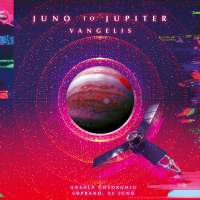
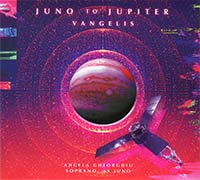
The brand new Vangelis album. Please for now follow all developments around this album in the news section of this site.
Vangelis returns to space missions, this time to celebrate the NASA mission to Jupiter, lead by Vangelis' friend Scott Bolton. The result is one of Vangelis' more ambient albums. While melodic from time to time, it leans more towards unearthly soundscapes, colorful electronic rhythms and musical moods, with an occasional symphonic touch. The three tracks with soprano Angela Georghiu's powerful dynamic voice should stand out from all of that, but Vangelis makes them fit perfectly, resulting in a surprising and succesful mix of classical elegance and electronic imagination.
long time followers may enjoy references (most of them seemingly intentional) to both popular and obscure Vangelis work from the past, including Rosetta, Blade Runner, Conquest of Paradise, the Neurosurgery VHS project and the Vangelis scored stage performance of "The Tempest" .
Released, so far in two editions, the standard CD and the CD Box. It is to be followed by a vinyl LP release, as well as a Limited Edition Box set, which includes the CD, the booklet, a poster and a bookmark.
All except the standard CD come with a thick 176 pages booklet, full of photographs and drawings from the NASA mission, the team that made the mission happen, the planet, Greek mythological scenes and figures, as well as many never before seen photographs of Vangelis and his collaborators on this album. Also included are liner notes and words from Vangelis, Angela Gheorghiu, Scot Bolton and Stamation Krimigis. The standard CD actually comes with a link to a PDF, to enjoy the same content in digital form.
	01. Atlas' Push
	02. Inside Our Perspectives
	03. Out In Space
	04. Juno's Quiet Determination
	05. Jupiter's Intuition
	06. Juno's Power
	07. Space's Mystery Road
	08. In The Magic Of The Cosmos
	09. Juno's Tender Call
	10. Juno's Echoes
	11. Juno's Ethereal Breeze
	12. Jupiter's Veil Of Clouds
	13. Hera/Juno Queen Of The Gods
	14. Zeus Almighty
	15. Jupiter Rex
	16. Juno's Accomplishments
	17. Apo 22
	18. In Serenitatem
Nocturne (2019)
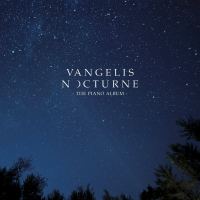
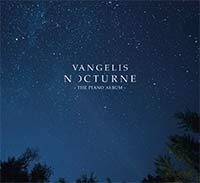
Vangelis recorded 11 new compositions plus 6 re-recordings of his classic hits, all (except string based "Intermezzo" and musicbox lullaby "Pour Melia") recorded in piano centered arrangements. Most or all are actually piano patches played on modern synthesizers. Most tracks have some soft backing of synth pads or sampled strings. The result is a laid back album that smoothly moves between a variety of soft and slow styles. Vangelis in easy listening mode. Highlights include "Through The Night Mist" and "Nocturnal Promenade".
Note that Longing is not related to the Blade Runner track of the same name. Movement 9 has frequent collaborator (orchestral transcriber) Irina Valentinova performing the piano.
	 1. Nocturnal Promenade                                          5:51
	 2. To the Unknown Man (From Spiral)                             5:14
	 3. Movement 9, Mythodea (From Mythodea)                         3:48
	 4. Moonlight Reflections                                        3:10
	 5. Through the Night Mist                                       5:12
	 6. Early Years                                                  3:32
	 7. Love Theme, Blade Runner (From Blade Runner)                 6:05
	 8. Sweet Nostalgia                                              3:38
	 9. Intermezzo                                                   3:45
	10. To a Friend                                                  5:23
	11. La Petite Fille de la Mer (From L'Apocalypse des animaux)    4:45
	12. Longing                                                      3:45
	13. Chariots of Fire (From Chariots of Fire)                     5:26
	14. Unfulfilled Desire                                           4:24
	15. Lonesome                                                     5:50
	16. 1492: Conquest of Paradise (From 1492: Conquest of Paradise) 4:51
	17. Pour Melia                                                   1:11
Rosetta (2016)
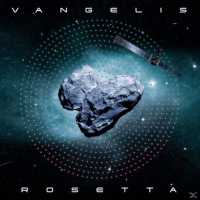
Vangelis returned to his electronic space music roots with this concept album, released on September 23 2016 on CD, vinyl and through all digital channels. The album celebrated the Rosetta mission, in which the European Space Agency (ESA) set out and succeeded to land a probe on a comet for the first time in history.
Rosetta was welcomed with enthusiasm by much of Vangelis' following, as a return to the space music genre that has recurred throughout Vangelis carreer, a return to form, as well as a return to a less classical, more synthesizer / electronic music oriented style. Of course, some tracks are still flavored with semi classical arrangements and some sampled or recreated orchestral instruments appear throughout the melodic tracks. Most pieces seem to express awe and wonder at both the cosmos and the ESA mission to comet.
Before the album was released, ESA released a couple of video's related to its mission, accompanied by then new Vangelis music. Those compositions appeared on the album as "Origins (Arrival)", "Philae's Descent" and quot;Mission accomplie (Rosetta's Waltz)quot; albeit in more or less remixed / edited versions.
     01. Origins (Arrival)                   4:21
     02. Starstuff                           5:15
     03. Infinitude                          4:30
     04. Exo genesis                         3:33
     05. Celestial whispers                  2:31
     06. Albedo 0.06                         4:45
     07. Sunlight                            4:22
     08. Rosetta                             5:02
     09. Philae's descent                    3:05
     10. Mission accomplie (Rosetta's Waltz) 2:12
     11. Perihelion                          6:35
     12. Elegy                               3:07
     13. Return to the void                  4:20
Chariots Of Fire - The Play (2012)
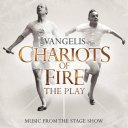
As the Olympic Games hit London in 2012, Vangelis' "Chariots of Fire" soundtrack music was suddenly everywhere. It played during the new year's fireworks, it played on radio stations, both pop and classical, it was simultaneousply played on church bells throughout the United Kingdom. And it featured in a new critically acclaimed stage play version of the movie, concieved with the help of the movie's director, Hugh Hudson and produced by James Bond's Barabara Broccoli. First staged at London's Hampstead Theatre, then moved to West End's Gielgud theater, the play's triumphant succes extended its running time over and over again.
Part of its succes was due to the music. Vangelis was brought in personally, to not only re-use the famous themes composed for the movie, but also to write new music, specifically tailored for this theatre production.
The results were released on a soundtrack CD. A first, for Vangelis' work for theatre, as he has been notorious in making a distinction between music for the consumer market and music created for theatre, or even for film.
The new CD, "Chariots of Fire - The Play" contains one track known directly from the soundtrack CD for the movie (Abraham's Theme), one track that has been slightly updated for the play and one track from the movie soundtrack now appears in a heavily updated version, with additional synthesizers and editing. Also included is the religious non-Vangelis track called "Jerusalem", which inspired the title of the movie, and now also the play.
All the other tracks involve newly composed music. Eleven in total. They sometimes contain references to the themes we know, but often are completely new compositions, concieved purely for new scenes in the stage play. All in all, this makes "The Play" much closer to a "new Vangelis album" then many would expect, based on the title.
It's a pleasant surprise how well the new tracks - recorded some 30 years later with entirely different technology and in a completely different musical era - fit in with the existing material. It's this quality, along with the elegant and melancholic moods that makes this album so well received by fans of Vangelis as well as fans of the movie.
The performances seem to have an intimate feeling. Quite a few of these tracks have probably been recorded almost entirely in the well known Vangelis one-take improvisation technique, which makes it seem almost as if you are sitting in his studio, listening to Vangelis perform the music live, as if it were a private concert. This makes that the production can sometimes sound a little less picture perfect than Vangelis' more polished albums, but this is easily compensated by the authenticity of the music, if you enjoy the way Vangelis' keyboard performances can caress your emotions.
The CD was released in the UK and the rest of Europe starting July 23, 2012.
       1. Chariots of Fire        3:29 (Previously released, updated)
       2. Physical Energy         3:13
       3. Home in the Glen        3:52
       4. Eric's Theme            4:06 (updated)
       5. Abraham's Theme         3:02 (Previously released)
       6. Harold's Despair        2:25
       7. Belief                  4:11
       8. Ballard                 3:10
       9. Aspiration              8:09
      10. Eric's Pleasure         5:07
      11. Lord Lindsay            1:36
      12. At The Starting Blocks  3:56
      13. Epilogue                4:26
      14. After the Race          4:37
      15. Jerusalem               3:05 (Previously released) [Not Vangelis]
Swiadectwo - Muzyka Filmowa (2008)
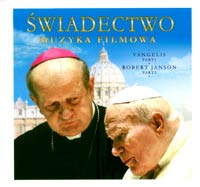
"Swiadectwo" ("Testimony", for English language versions) was a large scale documentary feature film about the late Pope John Paul II, released in Polish theaters in 2008. While the movie's light underscore was composed by Polish composer Robert Jansson, the producers commissioned Vangelis to write three pieces of music for both title sequences and the final scene in which the pope is buried.
The soundtrack was released on CD, but only in Poland, where it is still available. Packaged as a small hard cover booklet with 30 pages and the CD inside, the product looks different than any other Vangelis album. The music is split in two distinct parts, one for each composer, starting with the three Vangelis tracks.
Vangelis' music is very strong and moody. Performed entirely by Vangelis himself on synthesizers, but conceived in his orchestral style, the music forms a well rounded mini album.
The first track, "Sanctus", seems to unconsciously copy a theme Vangelis composed earlier for Oliver Stone's Alexander, when Alexander is wounded and carried of the battle field, but it is performed in a different way. Very elegant and uplifting. "Aeternitatem" is a faster and more elaborate piece, a tour de force of modulations and changing harmonies, extremely dynamic: Both serene and energetic at the same time. "Humanum Est" concludes the Vangelis part with dignity, slow and reflective, beautiful in its melancholy.
The Robert Jansson part is very different from the Vangelis music, with its light acoustic tones and repetitive melodies it is clearly intended for the background.
Contrary to most other Vangelis soundtrack album releases, the movie does not contain any music not found on the album, or vice versa.
Vangelis - Part 1
       1. Sanctus        4:34
       2. Aeternitatem   1:58
       3. Humanum Est    3:08
Robert Jansson - Part 2
       4. Dziecinstwo    7:09
       5. Podroze        4:59
       6. Swiadectwo 1   4:12
       7. Powolanie      4:53
       8. Swiadectwo 2   2:29
       9. Triumf         3:28
      10. Swiadectwo 3   4:03
      11. Nadzieja       4:30
      12. Zlo            1:25
      13. Cierpienie     4:16
El Greco Original Motion picture Soundtrack (2007)
Be careful not to confuse this album with "Foros Timis Ston Greco" (1995), later re-released as "El Greco" (1998): Two versions of a studio album that have no musical relation at all to this 2007 film or its soundtrack album.
Yannis Smaragdis' "El greco" was a Greek, Spanish and Hungarian co-production, filmed in English, Greek, Spanish and Italian. The film tells a dramatized version of the story of Domenicos Theotokopoulos, the 16th century painter who is better known as El Greco.
Having scored Smaragdis' previous film called "Cavafy", it was announced during pre-production and financing of El Greco that Vangelis would also be involved to compose the score for this production. It turns out that Vangelis composed a completely new score for this movie not linking it to or reusing tracks from his previous tribute to El Greco, released as a studio album. In fact, the music recorded for the movie hardly even resembles the 1995 work, which was inspired by the painting El Greco made, while the score was inspired by the on-screen story of the man himself.
Vangelis, who composed the music for this movie free of charge, released the soundtrack of this movie shortly after it hit the Greek theaters, in support the brave movie project. The film turned out a big commercial success in Greece, although it did not do so well outside of its borders. The album was produced and distributed with the help of Universal Greece.
All of the score was performed by Vangelis on synthesizers, sometimes in a semi orchestral style, but never imitating latter day symphonic music. Much of the score is quite subdued, moody but elegant and often romantic music to transport you to the time period with slight (or at times more than slight) discomfort added to reflect the movie's repressive themes. All in all these, tracks are not the typical "Greatest Hits" material, but they do posses a more quiet sort of quality. The one stand-out track everyone keeps talking about is track 1 on the album, in fact scored for the last scene in the movie. A choir builds from quiet to strong, a powerful hymn like melody that instantly hits your emotional buttons. The theme is reprised more subtly on piano with choirs during the end titles; the last track on the album, which means that this continuous piece in the movie was cut up to balance the album. It works either way.
Two of the album's tracks where written and performed by traditional musicians, as they appeared in the movie, while one track is a traditional, reworked by and performed with Vangelis himself.
Many fans were happy to see that most of the music in the movie is present on the CD, and most of the music heard in on the CD is present in the movie as well. There are some differences, but not as big as they were for films like 1492, Blade Runner or Chariots of Fire.
The movie played in both Greek and Spanish theaters, at which time the CD was available in both these countries. By now, it can probably only still be easily purchased in Greece, making it quite a difficult album to obtain.
       1. Part 1    3:59
       2. Part 2    1:56
       3. Part 3    4:20
       4. Part 4    2:26
       5. Part 5    3:06 (Traditional Folk Song of Chania, Crete)
       6. Part 6    2:05
       7. Part 7    1:30
       8. Part 8    1:56 (Composed and Performed by Psarantonis)
       9. Part 9    1:00
      10. Part 10   1:51
      11. Part 11   2:50 (Written and Performed by Loudovicos Ton Anogion)
      12. Part 12   4:56
      13. Part 13   2:36
      14. Part 14   1:06
      15. Part 15   2:40
      16. Part 16   2:46
      17. Part 17   2:28
      18. Part 18   3:16
Blade Runner Trilogy, 25th Anniversary (2007)
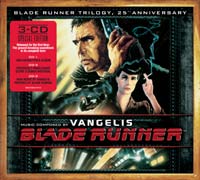
2007 Was the year in which Vangelis quite unexpectedly revisited his legendary soundtrack for Ridley Scott's iconic "Blade Runner" movie, with the release of a combined three CD album. Vangelis decided to take Warner's existing 1994 Blade Runner soundtrack release and repackage it together with two extra CDs. This combination, a licensing challenge extraordinaire, resulted in the "Blade Runner Trilogy" album, released by Universal.
With disc 1 unchanged from the Warner release, disc 2 contains music from the film that was not included on disc 1, supplementing it with music composed for but never actually used in the motion picture. Disc 3 is a completely new Vangelis album, composed and recorded in 2006 and 2007, inspired by the Blade Runner movie and with some references to the original score, created and released to celebrate Blade Runner's 25th anniversary.
Since 1994, fans of both the movie and its music had been venting their complaints and frustrations on the existing release. While it's intrinsic quality was almost exclusively hailed, some were disappointed that various important (and some not so important) musical cues from the movie that were not represented on the 1994 soundtrack release, while others thought the album's inclusion of bits of dialog from the movie did not allow the material to be fully enjoyed on its own merit. The promise of a three disc set raised expectations sky high.
But the Blade Runner Trilogy CD is a Vangelis CD, and he does things in his own way. For Vangelis, albums are more than an archive of separate music cues put together. They have to be crafted in ways to work in a different setting. Added to that, conflicting desires (e.g. "include only music from the movie" versus "include the longest versions possible") made it impossible to satisfy everyone's demands. Indeed, some important cues still remain unreleased, and some tracks could have been released unaltered or in longer versions. But despite such complaints, "Blade Runner Trilogy" is a very satisfying album, finally allowing this magnificent music the space it deserves, with some welcome afterthoughts added 25 years after the fact. The release is much more complete than the 1994 album, with a wealth of unreleased and unused pieces of Blade Runner music unlocked for the world to listen to, together with an album of new electronic Vangelis music, which has the same roots of inspiration as the the original masterpieces and gives a fascinating glimpse into Vangelis' memories of the Blade Runner movie as well as his imagination of what else this world would have to offer, should you go back to Scott's vision while filming outside of the story they happened to capture in the 1982 movie.
Highlights of the 2nd CD include the unreleased "One Alone" as well as "Desolation Path", the extended track of what was once known as the "Alternate Love Theme", heard in an early work print of the movie. Other highlights are the tracks that were much mourned as absent on the 1994 CD, including "Dr. Tyrell's Death".
The new album, called "BR 25" features 12 new tracks, all infused with some of the urban angst that is so closely associated with Blade Runner, but also venturing beyond the limits of where the original score took us. Some of the tracks and transitions feature spoken fragments by people like Ridley Scott, Scott Bolton, Oliver Stone, Cherry Vanilla, Rutger Hauer, Wes Studi, Laura Metaxa, Roman Polanski and Edward James Olmos. Highlights include the delicate "Piano in an Empty Room", the electrifying "Dimitri's Bar", the melancholic and jazzy "Sweet Solitude" and the mystique "Spotkanie Z Matka".
"Blade Runner Trilogy" is packaged in a thick digipack that folds open simetrically twice, revealing all three CDs and an extra sleeve to contains a small separate booklet. The artwork is full of beautiful stills from the movie, and director Ridley Scott wrote a new foreward for this set specifically.
Blade Runner still stands, like a landmark in the musical landscape, inspiring other artists to produce works that follow its sound, shape or musical vocabulary: derivatives and tributes that come and go, but collectively perpetuate further traces of this soundtrack's influence into popular as well as alternative music.
CD 1: Blade Runner Original Soundtrack Album
       1. Main Titles               3:42
       2. Blush Response            5:47
       3. Wait For Me               5:27
       4. Rachel's Song             4:46
       5. Love Theme                4:56
       6. One More Kiss, Dear       3:58
       7. Blade Runner Blues        8:53
       8. Memories Of Green         5:05
       9. Tales Of The Future       4:46
      10. Damask Rose               2:32
      11. Blade Runner (End Titles) 4:40
      12. Tears In Rain             3:00
CD 2: Blade Runner Previously Unreleased and Bonus Material
       1. Longing                   1:58
       2. Unveiled Twinkling Space  1:59
       3. Dr. Tyrell's Owl          2:40
       4. At Mr. Chew's             4:47
       5. Leo's Room                2:21
       6. One Alone (bonus)         2:23
       7. Deckard And Roy's Duel    6:16
       8. Dr. Tyrell's Death        3:11
       9. Desolation Path (bonus)   5:45
      10. Empty Streets             6:16
      11. Mechanical Dolls          2:52
      12. Fading Away               3:32
CD 3: BR 25
       1. Launch Approval           1:54
       2. Up and Running            3:09
       3. Mail From India           3:27
       4. BR Downtown               2:27
       5. Dimitri's Bar             3:52
       6. Sweet Solitude            6:56
       7. No Expectation Boulevard  6:44
       8. Vadavarot                 4:14
       9. Perfume Exotico           5:19
      10. Spotkanie Z Matka         5:09
      11. Piano In An Empty Room    3:37
      12. Keep Asking               1:29
Alexander (2004)
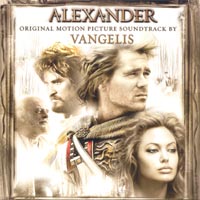
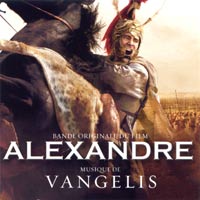
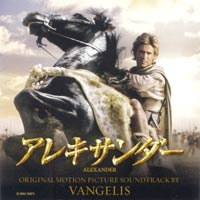
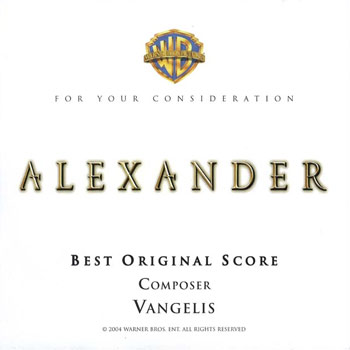
Vangelis' spectacular soundtrack album for Oliver Stone's movie about Alexander the Great. In the wake of "Mythodea", Vangelis continued the use of genuine orchestra in his music, moving more into the "epic film score" territory that a production like this asks for. At the same time, Vangelis never looses sight of his own sound and style, which has made his music so loved.
This combination has made the album very popular among most of his fans, except for those listening only from the electronic music perspective, or those who are mainly nostalgic for the "Nemo studios" sound from the 80s.
The music fits a historic movie set in times of King Philip and Alexander the Great , but isn't as Greek or semi Byzantine (read: heavy) as "El Greco" or even "Mythodea". Instead it tries to speak a more contemporary melodic / harmonic language, to express the story's drama, violence, romance, heroism and tragedy.
The album starts with some of the more lyrical tracks, with Titans probably as the most recognizable melody, with the humming choirs and crashing cymbals. "The Drums of Gaugamela" is probably the most filmic piece, a driving rhythm of heavy percussion and a true spectacle of brasses and strings doing battle under the guidance of exotic chanting.
Other parts of the album turn attention to the exotic flavors as Alexander conquers the East or the more heavy handed human tragedy when his health begins to fail, but it's never long before another epic melody (along with the expected choirs, tympani and crashes) keeps the spirits up.
Roxane's Veil" here is performed with Vanessa Mae on violin. The track was originally composed for Mae's album "Choreography" but its melody appeared in the movie for a love scene between Alexander and his new wife Roxane. As it turns out, Vangelis decided to use the Mae recording on the CD, not the harp / strings version he recorded for the movie.
As with most of Vangelis' soundtrack albums, much of the music on the album differs from that heard in the movie. Some tracks are different recordings (e.g. Introduction, Tender Memories, Roxane's Veil, Across the Mountains) while others are edited differently (Titans, The Drums of Gaugamela, The Charge). As always a great number of themes (some very good and prolific) heard in the movie aren't found on the CD at all. Interestingly, the one CD track that wasn't heard in the movie at all, "One Morning at Pella" has indeed showed up in the longer "Final Cut" version of the movie that Oliver Stone edited and released on DVD/Blu-Ray some years later.
Commercial release
       1. Introduction            1:32
       2. Young Alexander         1:36
       3. Titans                  3:59
       4. The Drums of Gaugamela  5:20
       5. One Morning at Pella    2:11
       6. Roxane's Dance          3:25
       7. Eastern Path            2:58
       8. Gardens of Delight      5:24
       9. Roxane's Veil           4:40
      10. Bagoas' Dance           2:29
      11. The Charge              1:41
      12. Preparation             1:42
      13. Across the Mountains    4:12
      14. Chant                   1:38
      15. Immortality             3:18
      16. Dream of Babylon        2:41
      17. Eternal Alexander       4:37
      18. Tender Memories         2:59
Plus, only on German and Borders Limited Editions:
19. Bizarre Bazaar 3:52
One more variation of this album has to be mentioned, even though it was never commercially available. Back in 2004 when the studio was hoping "Alexander" would be considered for Oscar nominations, a modified version of the album was created. It was produced in very limited numbers, burned as a CD-R with only a single cover sleeve, as is quite custom for Oscar promo material, and send to the selection of the Academy that decides the music nominations. It didn't succeed, but sometimes those promotional CDs reach second hand shops or collectors specialist stores. Because of the fact that it contains two otherwise unreleased tracks, it has become a much sought after item.
No official track list is included, but the following list using titles of the commercial release will help understand the structure of this alternative version. The first unreleased track is a gentle harp & string piece heard at two different points in the movie. The second is the melody we know from "Tender Memories", but performed more delicately on harp and strings, as heard during some of Alexander's infant scenes. Note that "One Morning at Pella", "Dream of Babylon" and the album's version of "Tender Memories" have been omitted.
"For Your Consideration" promo
       1. Introduction            1:31
       2. Young Alexander         1:36
       3. Titans                  3:59
       4. The Drums of Gaugamela  5:20
       5. [unreleased]            1:51
       6. Roxane's Dance          3:25
       7. Eastern Path            2:54
       8. [unreleased]            1:42
       9. Gardens of Delight      5:20
      10. Bagoas' Dance           2:29
      11. The Charge              1:41
      12. Preparation             1:42
      13. Across the Mountains    4:12
      14. Chant                   1:38
      15. Immortality             3:38
      16. Eternal Alexander       4:44
To hear as much of the music composed for this project as possible, one would need to listen to both versions of the soundtrack CD, watch both the theatrical cut of the movie as well as the longer "Final Cut" (it seems that the intermediate and shorter "Director's Cut" did not contain any music not heard in the two other cuts) and then watch a number of DVD extra that used some more of Vangelis' music, some of it not heard before, being Sean Stone's documentary called "Fight Against Time", as well as the "Resurrecting Alexander", "Perfect is the Enemy of God" and "The Death of Alexander" documentary features on other DVD releases.
Mythodea (2001)
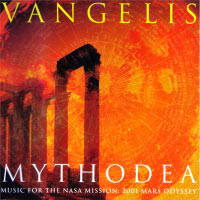
Vangelis' first release on his new label, Sony Classical is indeed as one might expect, more classical than ever before. It may seem a more elaborate continuation of El Greco, or a more traditional take (in the orchestral sense) on some of 1492's passages. Whatever one might feel the need to compare it with, be prepared to find the album to be something else all together.
It's commendable that Sony put their commercial faith in a work with - relatively speaking - so little easy hit potential. The strength of this work will not be found in accessible sing-along melodies or recognizable tunes. However, anyone who's looking for more than that will find everything he hopes for. With amazing grace Vangelis leads an orchestra, a large mixed choir, two perfect sopranos and of course his own synthesizer setup through a world of Greek mythology and outer space Mars exploration. After an introduction with electronic sound effects, the bombastic opening theme uplifts the spirits to prepare for the more sedate and reflective parts that occasionally build up to the album's dynamic highlights. The sopranos enter somewhere during the fourth track and sing beautiful, slow but also surprisingly complex solos and duets throughout most of the one hour long work.
Choirs, opera vocals, strings, windblown instruments, harps and orchestral percussion dominate the sound, but some of those parts are still played on - or doubled by - synthesizers. The style is pleasantly consistent, often slightly "Greek", always very serious but warm and full in sound. Sometimes dark, sometimes light and bright. But always in tune with the rest of the music.
The music is based on a concert that Vangelis performed with choir and harpists at the Herodium theater in Athens, 1993. For this release the work was revisited, certain tracks and cues added and many of the parts re-recorded, this time with the full London Metropolitan Orchestra, using the efforts of orchestrator / conductor Blake Neely. Amazingly enough the result feels as "Vangelis" as ever in both performance and sound, so that any sour memories of previously orchestrated cover versions are swiftly washed away after hearing this particular recording.
Both sopranos, Kathleen Battle and Jessye Norman - true divas in all senses of the word - provide the album with extra momentum, performing with as much sensitivity and power as they could draw on.
The release of this album was preceded by a new live performance: a spectacular show at the Temple of Zeus in Athens, with the entire orchestra and choir present, fronted by Vangelis, Battle and Norman. The show was used in the promotional campaign by means of television broadcasts, a web site, and many newspapers and magazines wrote about the event.
Both the concert and the album are closely tied with a mission NASA was undertaking around Mars. They used the music in their educational program, while the concert used NASA's Mars imagery combined with elements of ancient Greek mythology among the projected imagery, resulting in a surprisingly focussed combination.
The album appeared on CD and the concert was released as Vangelis' first official concert registration on DVD and VHS.
Germany (and some other countries) had a limited first pressing with an extra bonus track: Mythodea Special Edit, which combined the best bits of tracks 2 and 11, the same edit that was promoted in an official video clip. The album version with the bonus track however had a mistake in track list, erroneously naming the "Introduction" as if it were the first movement.
German release with bonus track / international release
       1. Movement 1             2:43          1. Introduction    2:43
       2. Movement 2             5:41          2. Movement 1      5:41
       3. Movement 3             5:39          3. Movement 2      5:39
       4. Movement 4             5:51          4. Movement 3      5:51
       5. Movement 5            13:42          5. Movement 4     13:42
       6. Movement 6             6:35          6. Movement 5      6:35
       7. Movement 7             6:27          7. Movement 6      6:27
       8. Movement 8             4:58          8. Movement 7      4:58
       9. Movement 9             3:07          9. Movement 8      3:07
      10. Movement 10            5:00         10. Movement 9      5:00
      11. Movement 11            3:03         11. Movement 10     3:03
      12. Mythodea Special Edit  3:57
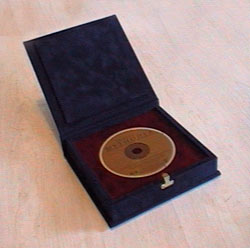
At the concert a special pre-release of the album was given out to guests and musicians, housing the Mythodea CD in a luxurious box. The CD inside is the same as the European release.
El Greco (1998)
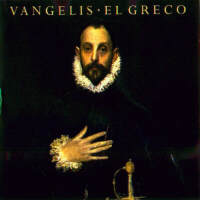
See also below: "Foros Timis Ston Greco" (1995)
New commercial version of the limited classic from 1995. The original album became legendary instantly upon its release in 1995, being hailed as superb, by the fans who managed to get hold of it. Three years later Vangelis decided to offer the music to the rest of the world in a slightly different version: a new track order with some altered transitions between the tracks, plus three new compositions, resulting in a total playing time of more than 73 minutes.
The three new tracks were recorded by Vangelis a few months before the release (1998) in Athens. They met with mixed response, being labeled 'too light', 'sloppy' or 'unfitting' by some, while being warmly welcomed by others. The new tracks are Movements 3, 5 and 7 on the new CD. The first two are light and playful, the last being a short track featuring classical percussion and uncredited input from a choir and classical vocalist, reminding of Vangelis' "Mask" album.
Be sure not to confuse this album with his 2007 release "El Greco Original Motion Picture Soundtrack", which represents the score Vangelis wrote for Smaragdis' film about the painter Vangelis had already paid tribute to before, in this studio album.
Since the track names consist of Movement numbers, the change in order and the insertion of new tracks caused most of the track names to differ from the original release. A comparison:
| Commercial release ('98) | Limited release ('95) | |
| Movement I | Movement I | |
| Movement II | Movement II | |
| Movement III | - New - | |
| Movement IV | Movement III | |
| Movement V | - New - | |
| Movement VI | Movement V | |
| Movement VII | - New - | |
| Movement VIII | Movement IV | |
| Movement IX | Movement VI | |
| Movement X (Epilogue) | Movement VII |
None of the old music has been notably changed or cut. Only the transitions between the tracks have been altered to fit the new order. Furthermore the first part of the new track Movement 3 (On the new album) has been dubbed over the ending of Movement 2.
German release with bonus track / international release
       1. Movement I            10:06
       2. Movement II            5:19
       3. Movement III           6:49
       4. Movement IV            6:26
       5. Movement V             4:26
       6. Movement VI            7:54
       7. Movement VII           3:20
       8. Movement VIII          9:44
       9. Movement IX           11:58
      10. Movement X (Epilogue)  7:00
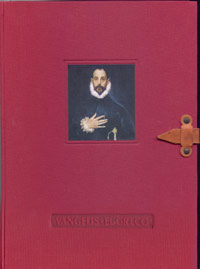
The music was presented to a celebrity audience in Athens' luxurious "Hotel Grande Bretagne", by having the album play over the speakers while the paintings were visually projected to accompany the music. The guests (Greek politicians, record company executives, etc.) were given a special custom made luxurious red box that contained sheets with information and the Greek print of the album.
Oceanic (1996)
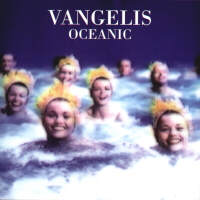
This ode to the Oceans was reportedly written and recorded by Vangelis at a beach house in Greece. It's a calm and gentle album with many sounds of waves and water.
Vangelis was personally involved in the sleeve design, as he used to be in the late seventies and early eighties. The album proved 'too light' for many old fans who prefer Vangelis' roots with progressive music, but was welcomed by many of the new age generation of his fans.
According to East West (the album's record label), some of the music was originally written for a documentary project about whales. Vangelis in the end however has taken the concept far beyond that subject.
       1. Bon Voyage             2:33
       2. Siren's Whispering     7:59
       3. Dreams Of Surf         2:43
       4. Spanish Harbour        6:42
       5. Islands Of The Orient  7:24
       6. Fields Of Coral        7:44
       7. Aquatic Dance          3:44
       8. Memories Of Blue       5:40
       9. Song Of The Seas       6:12
Foros Timis Ston Greco (1995)
See also above: "El Greco"
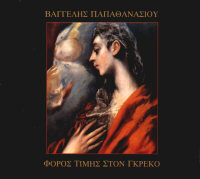
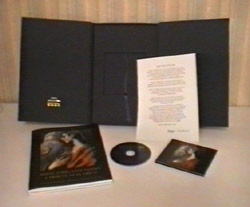
In approximately the same period as the release of Voices, Vangelis surprised his fans with this remarkable release. A unique CD with new unreleased music, packed with a book in a luxurious box, sold at one place only: The National Gallery (Alexandros Soutzos Museum) in Athens.
Later, in 1998, Vangelis rereleased the music on a commercial CD called "El Greco", where it was expanded with three new tracks and presented in a slightly different order. Many fans however still prefer the more sedate mood and order of the original tribute CD.
The title, Foros Timis Ston Greco translates to "A Tribute to El Greco" is imprinted in Greek characters on the beautiful blue velvet box. Only 3000 copies were made. Each CD contain the Greek version of Vangelis' signature, but most likely placed by use of a stamp. It is also hand numbered.
The book - dedicated to Vangelis - contains a text section about the Greek / Spanish painter Domenicos Theotocopoulos, who signed many of his paintings as El Greco, and a section with complete prints of some of El Greco's paintings as well as several prints of details of the same works.
All proceeds of sales are used to restore and maintain three El Greco paintings in Greek museums. It followed a fund raising project initiated by Vangelis to purchase El Greco's paintings and bring them to Greece.
The music is a slow, gentle and serious ode to the world El Greco committed to his canvasses. The synthesizer sounds are all reminiscent of classical instruments but only suggest their origin. The result feels very very Byzantine, but in a contemporary way.
Vangelis is joined by two classical voices: soprano Montserrat Caballé and tenor Konstantinos Paliatsaras; each featured on one of the seven movements.
Despite repeated rumors of the book selling out, there are still some copies left for purchase in the museum shop of the National Gallery in Athens. The box can only be purchased in person. Current price is €90, although it used to be priced higher.
In 1998 a new version of the album was compiled, with 3 additional tracks, being released commercially and not limited as a normal CD. The artwork was new and of course, no book, box or autograph were included.
Also, be sure not to confuse this album with his 2007 release "El Greco Original Motion Picture Soundtrack", the score Vangelis wrote for Iannis Smaragdis' film about the painter Vangelis had already paid tribute to in this studio album.
       1. Movement 1   10:08
       2. Movement 2    5:25
       3. Movement 3    6:26
       4. Movement 4    9:46
       5. Movement 5    8:12
       6. Movement 6   11:52
       7. Movement 7    7:00
Voices (1995)
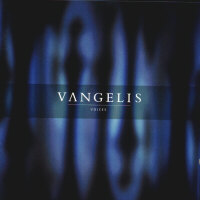
Shortly after the commercial success of 1492, Vangelis released this album, which might be an ode to the human voice. But the main part of the music still seems to be instrumental, sometimes with choirs.
At first the album may seem to cash in on the Conquest of Paradise hype by opening with a bombastic (but solid) track that is reminiscent of the Conquest of Paradise single. The German advertising campaign claims Vangelis wrote this as thanks to Henry Maske for his part in the success of 1492, but that sounds more like a marketing trick. The rest of the album is calm and ethereal. Many passages are reminiscent of former works while three different vocalists (Paul Young, Stina Nordenstam and Caroline Lavelle) contribute in surprising ways.
       1. Voices                        7:00
       2. Echoes                        8:20
       3. Come To Me                    4:40 (Caroline Lavelle)
       4. P.S.                          2:05
       5. Ask The Mountains             7:55 (Stina Nordenstam)
       6. Prelude                       4:24
       7. Losing Sleep (Still My Heart) 6:41 (Paul Young)
       8. Messages                      7:30
       9. Dream In An Open Place        5:50
Blade Runner (1994)
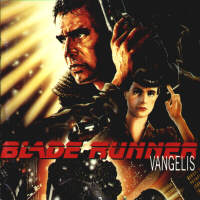
In 1982 Vangelis recorded the music for Ridley Scott's cult classic "Blade Runner", which was released in 1983. For still unknown reasons (I will not quote any of the many speculations since non of them was ever confirmed by a directly involved party) the original music was never released on a soundtrack album. A replayed "orchestral" version by the "New American Orchestra" was released but it couldn't match the original at all.
Paul M. Sammon's book "Future Noir, the Making of Blade Runner" (ISBN 0-06-105314-7) mentions an extremely rare bootleg tape (60 minutes) that surfaced just before the film was released theatrically, covering a selection of the film's music in very bad quality.
In 1989 the Themes compilation CD was released featuring the end titles (ending slightly
different) and the love theme.
In 1992 a CD-bootleg appeared with the music of the film in bad sound quality, but looking very official ("unauthorized replication prohibited"). It contained most of the score plus some bonuses like the sound of the original trailer.
Finally in 1994 it happened: an official soundtrack album was released, perhaps to back up the theatrical re-release of the film in slightly different form. In this new version of the film Harrison Ford's voice-over narration was gone, a 10 seconds unicorn dream sequences was inserted and the ending was cut short (the car sequence - originally lifted from "the Shining" was cut off). That's all but it has changed the film's perspectives tremendously.
The music on this official album is sadly far from complete. Some major passages were left out, like the chorus accompanying the revenge by Roy on his creator, as well as the beginning of the opening titles. But what it does offer is FANTASTIC sound quality, well chosen included dialogs and a few extra tracks that were not included in the film, yet written for it or inspired by it. It cannot totally replace the bootleg release, but it is all the more unmissable on its own accounts.
Some prominent guest performances: Rachel's song is sung by Mary Hopkin (in crystal clear 'aah' style years before Enya popularized this art form), Don Percival sings "One More Kiss Dear", Dick Morrisey plays the "Love Theme" saxophone and Demis Roussos hums and chants on "Tales of the Future".
       1. Main Titles                3:42
       2. Blush Response             5:47
       3. Wait For Me                5:27
       4. Rachel's Song              4:46
       5. Love Theme                 4:56
       6. One More Kiss Dear         3:58
       7. Blade Runner Blues         8:53
       8. Memories Of Green          5:05
       9. Tales Of The Future        4:46
      10. Damask Rose                2:32
      11. Blade Runner (End Titles)  4:40
      12. Tears In Rain              3:00
1492, Conquest of Paradise (1992)
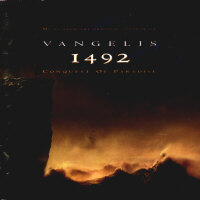
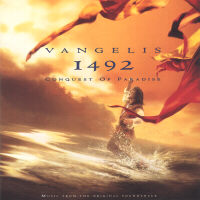
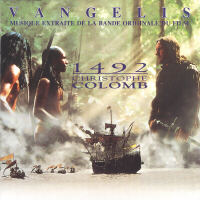
This is the soundtrack to Ridley Scott's epic film about Christopher Columbus. The story focussed on Columbus' motivations, and uses his quest as a symbol for exploring the unexplored, doing things no one has done before. All this was brought to life with stunning visuals and a remarkable sense of detail. This movie needed an epic soundtrack, and Vangelis skillfully provided just that.
The recordings on the album differ greatly from those in the film. Some passages are identical but much of the music on the album can not actually be heard in the movie, or appears on the album in an entirely different form. Other music appears in the film but not actually on the album. This makes it seem more like a studio album than a soundtrack release. Many of the character themes as well as some passages for major turning points in the film (like the storm near the end) are not represented on the album.
What remains of the album however is not less desirable. A magnificent collection of melodic music, filled with choirs, appropriate synthesizers and ethnic instruments make this album sound relaxing and exciting at the same time. It is often regarded as one of the favorites amongst Vangelis' fans.
It is also his greatest commercial success so far. Three years after its initial release it was used as personal theme by German boxing champion Henry Masked and re-released on CD single. This triggered a huge hype in Europe hitting the nr. 1 charts positions in Germany, Austria, Portugal, the Netherlands, Belgium and other countries, breaking many sales records (both single and album).
       1. Opening                                   1:21
       2. Conquest Of Paradise                      4:30
       3. Monastery Of La Rabida                    3:24
       4. City Of Isabel                            2:08
       5. Light And Shadow                          3:31
       6. Deliverance                               3:20
       7. West Across The Ocean Sea                 2:44
       8. Eternity                                  1:53
       9. Hispanola                                 4:39
      10. Moxica And The Horse                      6:42
      11. Twenty Eighth Parallel                    4:47
      12. Pinta, Nina, Santa Maria (Into Eternity) 12:37
Because the album was awarded with many platinum records East West organized a celebration party for Vangelis, who was to receive the awards in Greece. In February 1995 the ceremony took place in "Hotel Grande Bretagne", a luxurious hotel at the Constitution Square in Athens. Present were many famous people including Irene Papas, Milva and Mikroutsikos.
The score itself had already been nominated for a Golden Globe award. A pity that he didn't win this, since Vangelis collects globes as a hobby.
Page of Life (1991)
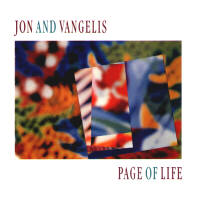
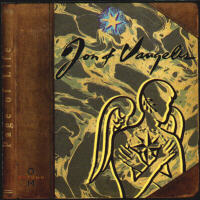
The fourth "Jon and Vangelis" album sounds rather different than the first three. Partially because of Vangelis' "new sound", which he had introduced with the Direct album, but also because their combined musical style seems to have changed. The album was not a big commercial success and there were no single-charts successes either.
The regular European / Canadian CD release (top picture) of this album in 1991 was in fact a recompiled compared to an earlier version of the album that had leaked. The leaked version different on a number of points, including the existence of an extra song called "Change we Must", extra nature sounds on "Garden of Senses" and a long instrumental opening to "Wisdom Chain". Some tracks were missing on the early version, including "Jazzy Box" and "Is It Love" (which is essentially not a Jon and Vangelis track, as Vangelis was not involved, neither in composition nor in the performance).
Arista version (Europe/Canada): Arista, 261 373
       1. Wisdom Chain               5:22
       2. Page Of Life               3:16
       3. Money                      6:07
       4. Jazzy Box                  3:14
       5. Garden Of Senses           6:24
       6. Is It Love                 4:27
       7. Anyone Can Light A Candle  3:44
       8. Be A Good Friend Of Mine   4:13
       9. Shine For Me               4:10
      10. Genevieve                  3:48
      11. Journey To Ixtlan          5:50
      12. Little Guitar              1:43
The second version of Page of Life, released in the USA in 1998 by Higher Octave music on the "OMTOWN" label, is closer to the leaked unreleased version, because it omits a few tracks ("Is It Love", not with Vangelis), "Jazzy Box", "Be a Good Friend of Mine" and "Journey To Ixtlan") and reinserts the 5 minute Vangelis intro of "Wisdom Chain" (with some new vocals and different editing) as well as the original "Change we Must" recording. This one however has been drastically cut: The unreleased original version had a delightfully subtle instrumental opening by Vangelis which ends in the waves you can still hear as the start of this version.
Also the nature sounds and extra vocal inserts in "Garden of Senses" that were deleted on the European/Canadian release are back on this version. Finally the song "Shine for Me" is a bit different and "Money" is mixed differently.
Notice that the uncredited female vocals on "Change we Must" are the lovely voice of Mary Hopkin, who also sang "Rachel's Song" on the "Blade Runner" release.
This version of the album has later been retracted from the market.
Higher Octave version (USA/Japan): OMTOWN, OMCD 45337
       1. Change We Must             6:28
       2. Anyone Can Light a Candle  3:43
       3. Page of Life               3:17
       4. Money                      5:43
       5. Little Guitar              1:42
       6. Garden of Senses           6:32
       7. Genevieve                  3:45
       8. Shine for Me               4:01
       9. Wisdom Chain              10:44
The City (1990)
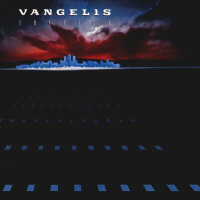
This moody album tries to capture the spirit of a day in a city from one morning to the next morning. Various musical ambiances represent different parts of day or night.
"Dawn" opens with complex harmonics and set the somber mood for the rest of the album. The heavy "Nerve Center" features crunchy guitar sounds and electronic choirs. Twilight is a mysterious harp tune. Procession a simple but impressive hum along melody and a fitting finale to the work.
Some of the music has a "jazzy" touch, showcasing synthesized wind and brass instruments. Many musical genres are used throughout, making it a versatile album. Its moody and generally slow pacing makes some people call it depressive, others call it thoughtful.
       1. Dawn
       2. Morning Papers
       3. Nerve Centre
       4. Side Streets
       5. Good To See You
       6. Twilight
       7. Red Lights
       8. Procession
Direct (1988)
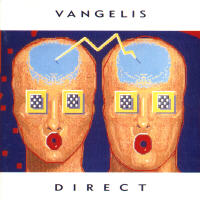
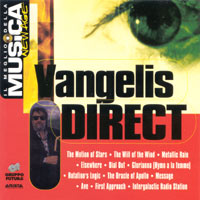
Vangelis moved to a new label temporarily (Arista) and introduced a totally new style with this album. He started using more sample based sounds and an impressive new style of production, giving this album an unmatched clear and diverse "sound". On top of that come the highly original but accessible "pop meets classic"-composition techniques as well as Vangelis' impeccable musical experience. This album seems to be one of the most popular amongst the fans.
The CD tracks "Dial Out" and "Intergalactic Radio Station" are NOT on the LP. The LP has CD tracks 1-2-3-4-6 on side A and CD tracks 7-8-10-11-9 on side B.
Vangelis announced this album as the first in a series of interconnected albums that would explore a wide range of the musical spectrum. It is not known however which later albums can be counted to these series.
The opera vocals on "Glorianna" were performed by Markella Hatziano.
       1. The Motion Of Stars
       2. The Will Of The Wind
       3. Metallic Rain
       4. Elsewhere
       5. Dial Out
       6. Glorianna (Hymn A La Femme)
       7. Rotation's Logic
       8. The Oracle Of Apollo
       9. Message
      10. Ave
      11. First Approach
      12. Intergalactic Radio Station
